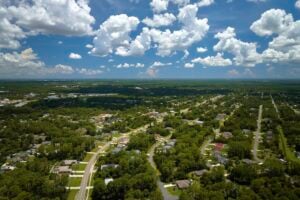
Is Ocala, Florida Safe From Hurricanes? A Detailed Comparison
The Ocala hurricane risk is significantly lower than that of Florida’s coastal cities, primarily because its inland location protects it from the most destructive element of a hurricane—storm surge. Situated in Marion County, approximately 75 miles from the Gulf of Mexico and 90 miles from the Atlantic Ocean, Ocala is not immune to hurricane impacts, but the threats it faces are substantially diminished compared to cities like Miami, Tampa, or Jacksonville.
Why an Inland Location Matters for Hurricane Safety
When a hurricane makes landfall, it immediately begins to lose its primary energy source: warm ocean water. As it moves over land, friction with the terrain disrupts its circulation, causing it to weaken rapidly. This process provides a natural buffer for inland communities like Ocala.
- No Storm Surge: Storm surge, the abnormal rise of water generated by a storm, is often the greatest threat to life and property during a hurricane. It can flood entire coastal communities with feet of seawater. Because of its central location and elevation (ranging from 50 to 200 feet above sea level), Ocala is completely protected from this devastating coastal phenomenon, which greatly lowers the Ocala hurricane risk.
- Reduced Wind Speeds: By the time a hurricane’s eye reaches Central Florida, its maximum sustained wind speeds have typically decreased by one or more categories. A storm that hits the coast as a powerful Category 4 could affect Ocala as a Category 1 or a strong tropical storm. While still dangerous, the potential for catastrophic structural damage is much lower, reinforcing the reduced Ocala hurricane risk.
Breaking Down the Ocala Hurricane Risk
While Ocala avoids the worst effects, residents still need to be prepared for specific threats. Understanding the realistic Ocala hurricane risk involves looking beyond storm surge and catastrophic winds.
Primary Risks in Ocala:
- Heavy Rainfall and Flooding: Hurricanes can carry immense amounts of moisture, leading to torrential rainfall over several days. This can cause freshwater flooding in low-lying areas, overwhelm drainage systems, and make roads impassable. Ocala’s higher elevation helps, but localized flooding is the most common hurricane-related issue and a key factor in the Ocala hurricane risk.
- Tropical-Storm-Force Winds: Even a weakened storm can bring damaging winds capable of downing trees, snapping power lines, and causing damage to roofs and older structures. Widespread and prolonged power outages are a significant concern.
- Tornadoes: Hurricanes often spawn tornadoes in their outer rain bands as they move over land. These can form quickly with little warning and cause concentrated pockets of severe damage, a risk that extends far inland.
Historical Perspective: Ocala’s Experience with Major Storms
History provides the best evidence of Ocala’s relative safety. During major hurricane events, Ocala has often served as an evacuation destination for coastal residents seeking safer ground, further illustrating the manageable Ocala hurricane risk.
- Hurricane Irma (2017): Irma made landfall in Southwest Florida as a Category 4 storm and traveled up the spine of the state, passing near Ocala as a Category 1. The area experienced widespread power outages, countless downed trees, and some localized flooding, but it was spared the catastrophic structural damage seen on the coast.
- Hurricane Charley (2004): Charley cut a destructive path across Central Florida. While communities closer to its direct path saw significant damage, Ocala experienced strong tropical storm conditions. This event highlighted the importance of being prepared even for fast-moving, compact storms.
In both cases, the impact on Ocala was significant but fundamentally different from the devastation at the point of landfall. This historical pattern reinforces the reduced nature of the Ocala hurricane risk.
Risk Comparison: Ocala vs. Coastal Florida
When comparing Ocala hurricane risk, Ocala offers a much safer profile than coastal cities like Miami or Tampa. Here’s a simple breakdown:
- Storm Surge:
Ocala has zero risk of storm surge due to its inland location, while coastal cities face high to catastrophic flooding from rising seawater. - Wind Speed:
In Ocala, storms typically weaken to tropical storm or Category 1 strength. Coastal areas, however, can experience major hurricane-force winds (Category 3 or higher). - Evacuation Orders:
Evacuations in Ocala are rare and usually limited to mobile homes or low-lying flood zones. In contrast, coastal cities often require widespread evacuations. - Primary Threats:
Ocala mainly faces power outages, freshwater flooding, and downed trees. Coastal cities deal with storm surge flooding and severe structural damage from intense winds.
Conclusion: A Safer Florida Haven
For those seeking to enjoy the Florida lifestyle without the extreme weather anxieties of coastal living, Ocala presents a compelling option. The Ocala hurricane risk is real but manageable and significantly less severe than in coastal regions. By being prepared for power outages and localized flooding, residents can confidently weather the storms that pass through the Sunshine State.
At Down Home Realty, we understand that concerns about the Ocala hurricane risk are an important part of the homebuying decision. Our team is here to guide you through every step, helping you find properties in safer areas, understand local flood zones, and make informed choices that protect your investment. With local expertise and a commitment to your peace of mind, we make sure you feel confident not just in your home, but in where you’re buying.
Frequently Asked Questions (FAQ)
1. Does Ocala ever get a direct hit from a major hurricane?
It is extremely rare for a major hurricane (Category 3 or higher) to strike Ocala directly with its full force. Storms almost always weaken significantly over land before reaching Marion County. The impacts felt are typically from a much weaker system.
2. Is flood insurance necessary in Ocala?
While Ocala is not prone to storm surge, freshwater flooding from heavy rain is a possibility. Whether you need flood insurance depends on your property’s specific elevation and designated FEMA flood zone. It is always wise to consult flood maps and consider a policy for peace of mind, as standard home insurance does not cover flood damage.
3. How does the Ocala hurricane risk affect home insurance rates?
Home insurance premiums in Ocala are generally more affordable than in high-risk coastal zones. Insurers price policies based on risk, and the absence of a storm surge threat and the lower probability of catastrophic wind damage make Ocala a much less risky location from an actuarial standpoint.